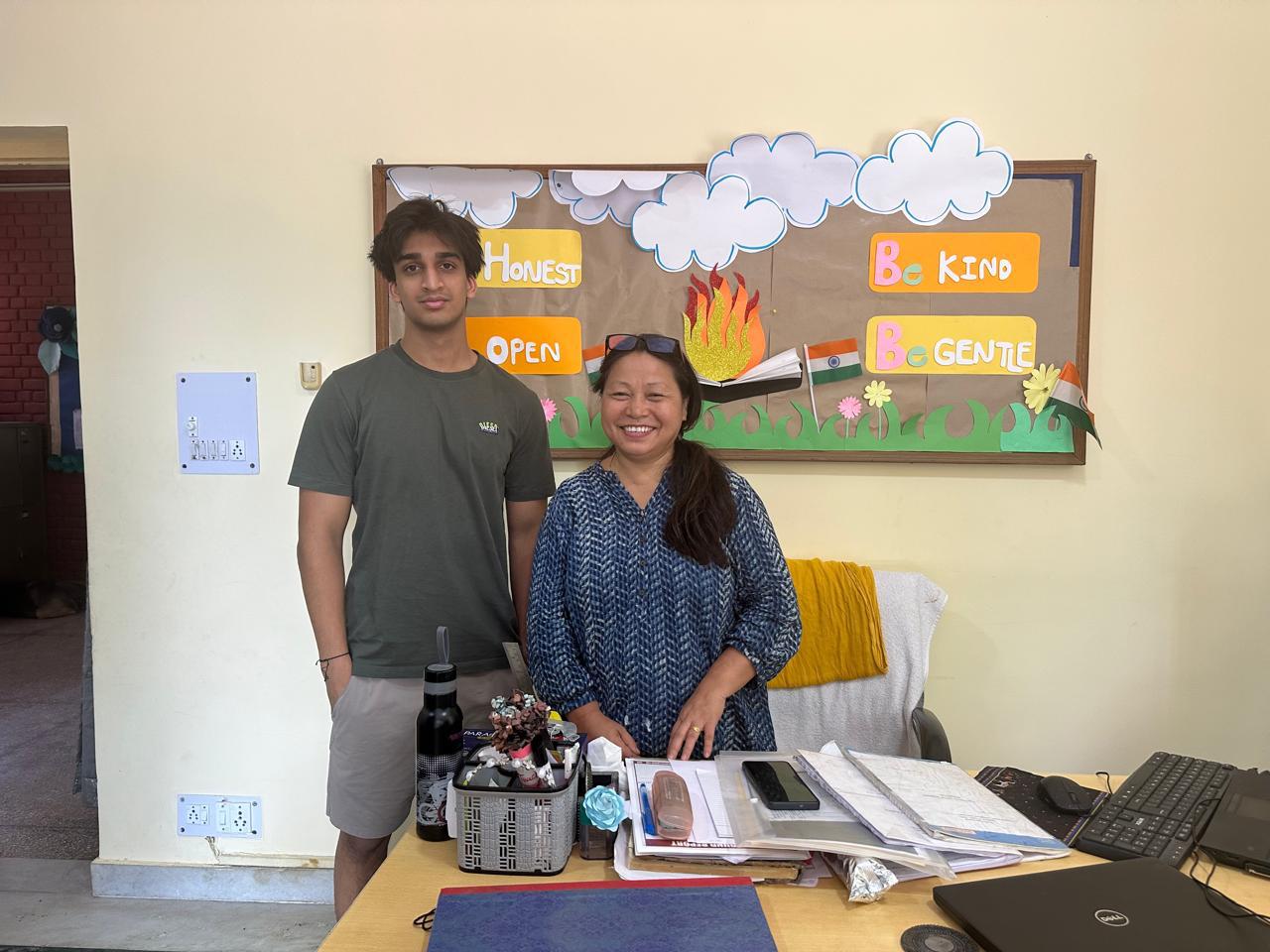
ABOUT THE FOUNDER
Weaving Essentials was founded by Yuvan Goenka and Udayan Goenka, students at Step-by-Step School, Noida, with the aim of contributing meaningfully to the lives of underprivileged children.
Living in Delhi, we became increasingly aware of the socio-economic disparities around us. Approximately 15% of the city’s population, nearly 23 lakh people, lives below the poverty line. Regular exposure to this reality sparked in us a desire to create tangible change rather than remain passive observers.
As we explored how to contribute in a practical and sustainable manner, we recognized that our access to resources within the garment manufacturing industry gave us a unique starting point. We decided to channel our efforts through the textile and clothing sector, combining social impact with environmental responsibility in a structured and scalable way.
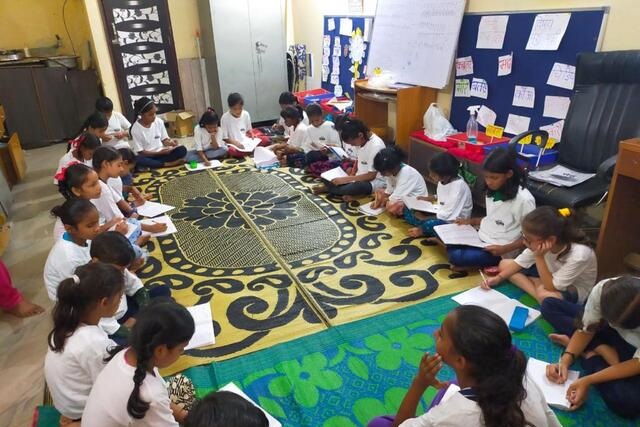
The idea for Weaving Essentials took clearer shape during visits to schools serving underprivileged children, where we observed gaps in resources, skill development opportunities, and structured support systems. Addressing these gaps became the foundation of our initiative.

Yuvan Goenka & Udayan Goenka
Co-founders
ABOUT WEAVING ESSENTIALS
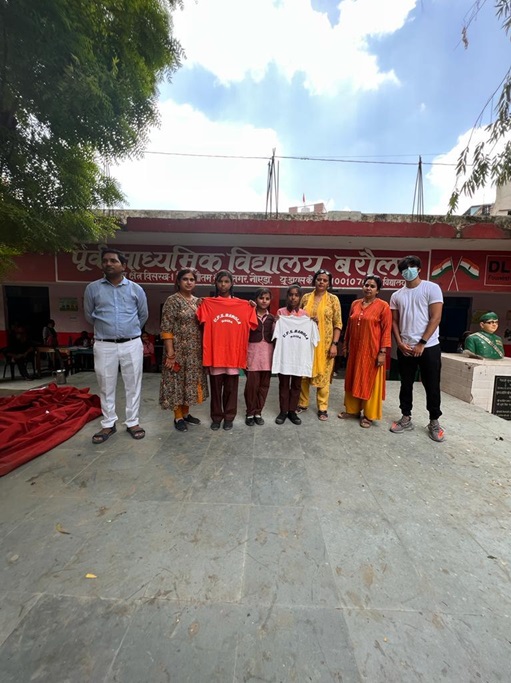
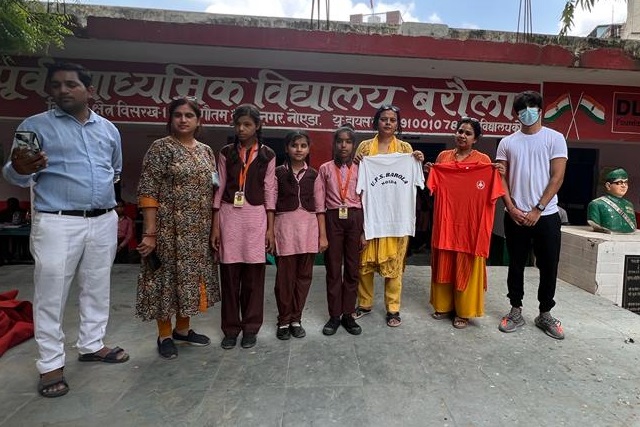
During our interaction with students and teachers at a government school, we noticed that the children did not have a uniform. We strongly believed that uniforms are an essential part of every school, not only as a practical requirement but also as a symbol of equality and unity among students. Supplying uniforms to government and NGO-run schools, therefore, became a meaningful and achievable starting point.
At the same time, we were conscious of the environmental challenges within the textile industry. According to the Indian Textile Journal, more than 1 million tons of textiles are discarded every year in India, much of it from firms and households. Fabric waste can take over 200 years to decompose in landfills, contributing to greenhouse gas emissions and environmental contamination.
To address both social and environmental concerns, we incorporated sustainability into our model by upcycling surplus fabric from garment manufacturing units. We collected leftover material according to project requirements and utilized it for production. This approach reduced textile waste while also easing the financial burden of the initiative. Throughout the process, we remained focused on environmental responsibility, economic sustainability, and operational efficiency.
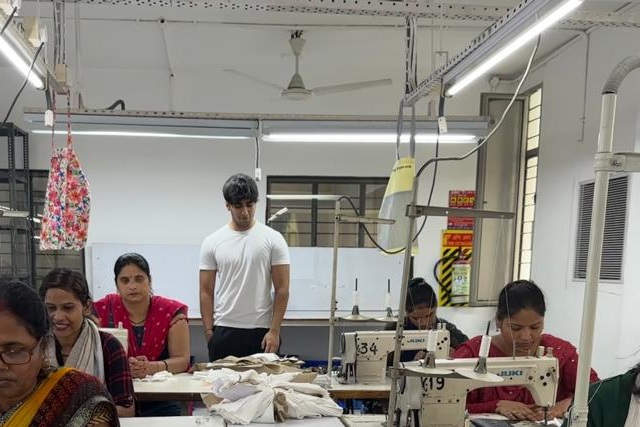
As the project evolved, we expanded its scope to empower women by training them to operate sewing machines and equipping them with valuable skills that could enable financial independence.
In essence, Weaving Essentials aims to create a meaningful and sustainable initiative that engages all participants in community development.